


You’ve decided it’s time to start therapy, but looking for a therapist sounds like a daunting task. Perhaps you are worried that you won’t find the right therapist. Maybe you’ve found the right therapist, but they have a waitlist or do not accept your insurance. Whichever it is, this blog is covering how to find the right therapist for you!
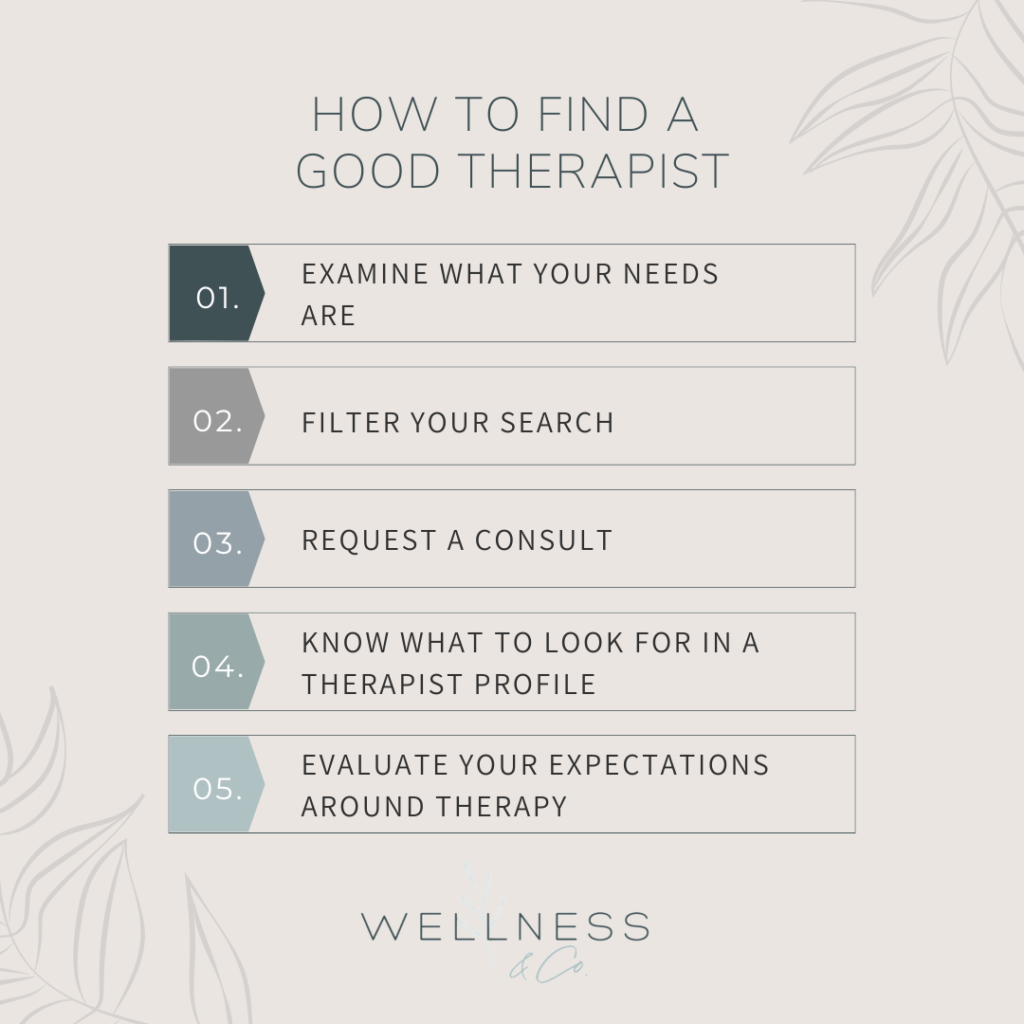
Here’s a 5-step guide
Step 1- Examine What Your Needs Are
Think about what you are going to therapy for. Ask yourself a few questions such as: “in what areas in my life do I feel stuck” or “what do I want to get out of therapy”.
For example if you’re a mom, it could sound like, “I often feel like the default parent. I want to improve how I communicate my needs to my partner and learn better ways to manage stress around parenting”.
This example gives a clear picture of what you’re coming to therapy for and provides your potential therapist with context. Being open and honest in the beginning allows the therapist to determine if you two are a good fit for each other.
Bonus Tip: First things first – You are the expert of your life. Your therapist is the expert of growth/change and what it takes to get where you want to go. Therapists hear a lot: “well how can you give me advice, you’re not married” or “you don’t have kids.” That being said, desiring certain things in a provider is NORMAL *and* the things you desire may also be a snapshot into your own fear and bias. At the end of the day, talk with your provider about these concerns. Open dialogue is key!
Step 2 – Filter Your Search
Platforms such as psychology today and good therapy have a huge directory of therapists. It can be overwhelming scrolling through all the pages which often leads to decision fatigue and delay in getting help. To prevent this, I suggest using the filter feature and search for therapists who match your preferences. Perhaps you are looking for a female therapist, in-network with cigna, and within 10 miles where you live. Platforms such as psychology today allow you to filter your search to meet this criteria.
Bonus Tip: If a certain demographic variable is important to you, feel free to honor that. For example, if you’re a Woman of Color, you may appreciate the directory Therapy for Black Girls as an avenue for finding a provider.
Step 3- Request a Consult
Don’t hesitate to contact multiple therapists before making your final decision. I’ve found requesting a consultation to be incredibly helpful when finding a therapist. A quick 15-minute phone call or video meeting will give you a glimpse of what the therapeutic relationship may be like.
Finding the right therapist for your needs is a big deal.
Don’t be afraid to write down questions ahead of time and ask for clarification if there’s something you don’t understand. A good therapist will be happy to answer any concerns or questions you may have.
Bonus Tip: If the therapist you prefer is not available or has a waitlist. Request a list of referrals.
Often therapists have connections with other providers in the community. Keep your search going by contacting a few people on their referral list.

Step 4- Know What to Look for in a Therapist Profile
First, read over the therapist’s profile section. As you are reading, do you feel seen by their words?
Second, notice the finances section. There will be a list of accepted insurance plans and if the therapist is ‘out of network’ then the cost of sessions may be listed.
Finally, check out their specialties. This is the therapists niche and usually means they have a certain level of expertise in those specialties. If you’re a mom struggling with anxiety or depression, I suggest finding a therapist with specialties in Women’s Issues, Pregnancy, Postpartum, and Life transitions.
Bonus tip: If you were ever wondering what all those letters mean behind a therapist name. Here’s a quick cheat sheet to common licensures therapists hold. This list is non-exhaustive, as mental health professionals have various educational training and the type of licensure to represent their training may vary depending on the state. Here are a few common letters behind mental health professionals names and what they mean:
LCSW-C: Licensed Clinical Social Worker
LCPC: Licensed Clinical Professional Counselor
LCMFT: Licensed Clinical Marriage and Family Therapist
PhD: Doctor of Philosophy *expertise in a very specific area (e.g., childhood development, gerontology, etc.)
PsyD: Doctor of Psychology
Step 5- Evaluate Your Expectations Around Therapy
Once you’ve found the right therapist and made your first appointment. Take a deep breath because you’ve already tackled the hardest part which is reaching out! Now, you begin the journey to self-healing and prioritizing your mental health.
As you start the process, think about your goals and expectations for therapy. Share your concerns and thoughts with your therapists. Mental health professionals are trained to handle the hard stuff and welcome you to therapy exactly how you are. Be patient with the process and remember as long as you continue to show up for yourself healing will come.


Brittany’s specialty and passion is rooted in pregnancy, postpartum, and perinatal mental health. She aims to help parents reach mental and emotional wellness; while navigating the daily demands of the parenting journey – one of life’s biggest transitions. She loves supporting her clients to overcome stuck areas in their lives and grow into the person they were always meant to be.

